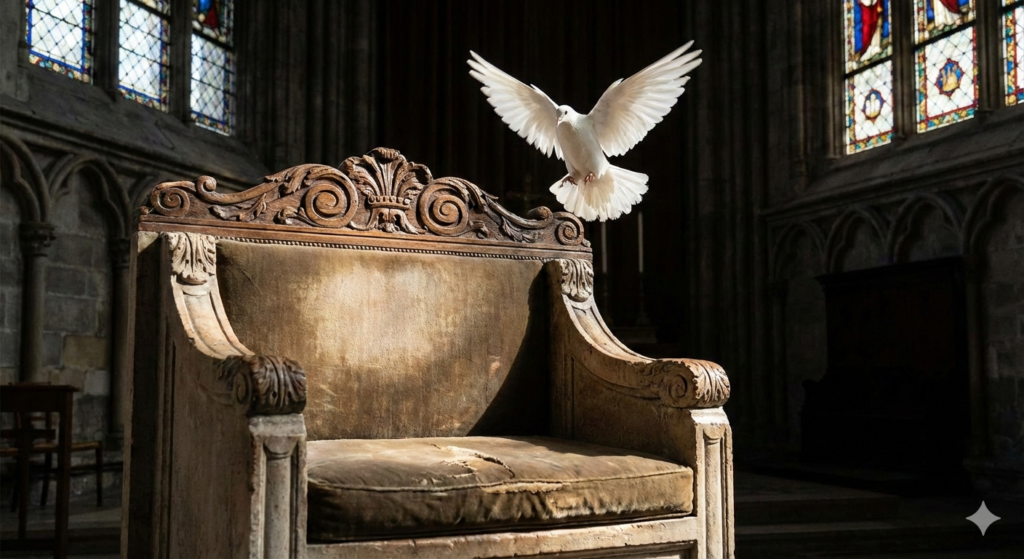
As we enter early December, the air is filled with the familiar lyrics of Handel’s Messiah and the prophetic words of Isaiah 9:6: “Wonderful, Counselor, The Mighty God, the Everlasting Father, the Prince of Peace.” But in a world filled with “absolute distractions”—wars, rumors of wars, and constant threats to our well-being—how does Christ actually enact His role as the Prince of Peace? How do we access a peace that is not just a feeling, but a fortified state of being?
What Does “Prince of Peace” Mean?
The title “Prince of Peace” (Hebrew: Sar Shalom) describes more than a quiet disposition. It defines a ruler whose authority establishes wholeness and order.
According to the renowned commentator Matthew Henry, Christ earns this title through His righteousness:
“He was king of Salem, that is, king of peace; first king of righteousness, and after that king of peace. So is our Lord Jesus; he by his righteousness made peace… Christ speaks peace, creates peace, is our peace-maker.”
The Distinction Between Two Types of Peace
| Worldly Peace | The Peace of Christ |
| Dependent on favorable circumstances. | Operates regardless of external trials. |
| Fragile and easily disturbed by news. | A “supernatural gift” that transcends understanding. |
| Passive (the absence of conflict). | Active (the presence of a Garrison). |
How Christ Enacts His Peace: The “Garrison” of the Heart
In Philippians 4:6-7, the Apostle Paul provides the technical “blueprints” for how this supernatural peace functions. While the world tempts us toward anxiety, the Amplified Version (AMP) reveals a deeper meaning in the original Greek:
“And God’s peace… which transcends all understanding shall garrison and mount guard over your hearts and minds in Christ Jesus.”
An Active Defense System
This action is not passive; it is an ongoing military-grade protection for your internal life.
- It Fortifies: It builds a wall around your soul (mind, will & emotions)
- It Keeps Watch: It monitors your thoughts (the mind) to prevent “distractions” from taking root.
- It Adapts: As an “Anointed Overcomer,” His peace adjusts to the specific trials and tribulations you face today.
Entering the Promised Rest: The “Finished Work”
A key to resting in the Prince of Peace is submitting to His Kingship and exercising faith in His “Finished Work.”
In Hebrews 4, we see that Christ, after purging the sins of mankind, sat down. In the biblical context, “sitting” indicates that the work is complete.
- Christ’s Rest: He sits at rest, waiting for His enemies to be placed under His feet.
- Our Rest: Because He has already won the victory, we are invited to “cease from our own works.” We no longer have to worry about our legacy or our future because our King has already secured them.
Holding Fast in December
The “Good News” is that we are free from the torments of modern anxiety. By submitting to the Kingship of Christ, we receive a commodity found nowhere else: a peace that does not ignore the storm but stands guard through it.
The Key takeaway: We don’t have to produce peace; we simply have to hold fast to the one who is Peace.
“We often think of peace as the absence of conflict. How does the idea of peace as a ‘garrison’ change your perspective today? Add your comment in the comment section”